From what I can see, one of the common pitfalls of parenting a special needs kid is despair. There’s no explaining how draining it can be at times. I can’t know for a fact, but I suspect that parents of regular, store-bought kids don’t have as many moments where you fall into a little mental “What is to become of us?” cell.
Autism’s Parent Trap is a thoughtful article by Cammie McGovern in the New York Times that was spawned from a truly tragic subject: Three recent cases of autistic children murdered by their parents. Essentially, they died in the wake of parental frustration borne of doing everything they could and not getting much progress despite their efforts.
The article hits some poignant beats for us. Jon’s isn’t autistic—his challenges stem from physiological damage and the resultant developmental delay—but some of his behaviours are not dissimilar. We see a lot of progress, but much of it is gradual: socialization is slow to root, some aspects of math, like simple addtion and subtraction, aren’t rooting much at all. Toileting for #1 is pretty close to fully ingrained; for #2 it just does not seem to register.
The physical aspect of the cerebral palsy reminded us from six months on that there’s no “cure”. We knew we were striving for Jon to be the best he could be, given what he could work with. (To quote Clarence, cradling the infant Jon, “We’ll make him the coolest little guy with cerebral palsy ever.”*) We’ve come very, very far. Still, there are days.
Since the Times won’t keep the full text up forever, I’m going to pull a quote or two from Cammie McGovern:
I don’t mean to sound pessimistic about the prospects for autistic children. On the contrary, I see greater optimism in delivering a more realistic message to families: Children are not cured, but they do get better.
And better can be remarkable… I remember thinking maybe we’d laugh someday at the lengths we went to when we were teaching him language — the flashcards, the drills, the repetitions. Now he’s 10 and talking at last in his own quirky ways, and we don’t laugh about the drills (though we laugh about plenty of other things). Language is a victory. So is connection and purposeful play. So are the simpler things: a full night’s sleep, a tantrum-free day.
Parents working toward these goals will one day be surprised and delighted by their children’s funny new obsessions, odd fixations, and tentative but extraordinary connections with other children. Being more realistic from the start might make it possible to enjoy the journey and to see it for what it is: helping a child who will always function differently to communicate better and feel less frustrated. To aim for full recovery — for the person your child might have been without autism — is to enter a dangerous emotional landscape.
Hear, hear. One thing we have learned from Jon is that the fancifiul “What If” is a painful crock. There is no point in considering what could have been. You’ll simply be consumed by grief rooted in a fiction.
Play the cards you are dealt. Work with what you’ve got. And take joy in the little things.
*Given his father, this wasn’t going to happen easily.
 (This is the text of an email he sent to his teacher Tami right after he saw the movie Cars)
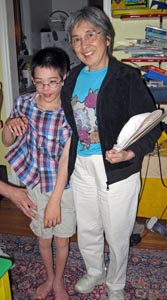 Jon’s Bachan just left from a week-long visit from Vancouver. Actually, we didn’t see each other very much as it was more of a working vacation for her and her sibs as they made preparations (cleaning, organizing, house-selling prep, etc.) for moving O-Bachan into a retirement home in Toronto. —L)
 Is the commercial below what your mornings are like before you get your cuppa joe?